Showing posts with label bubonic plague. Show all posts

Monday, 5 December 2022

Black Plague Enlightened

The year is 1628. ‘Protect us from famine, war and plague, Seigneur,” cry the residents of Lyon, but their plea comes too late. The bubonic plague already crossed the Rhône River in August, terrifying the inhabitants and killing half of them.

By 1643 they are desperate, and pray to the Virgin Mary to return good health to Lyon. Miraculously, the black plague disappears from the city, never to return and the people never doubt their divine protection.

So, how did the celebration of the Virgin Mary’s eradication of the plague become the largest light festival of our modern-day century? 

Lyon Skyline during the Light Festival

It began on September 8th 1852, with the inauguration of the statue of the Virgin Mary, installed on La basilique Notre-Dame de Fourvière to thank her for banishing the plague from Lyon. Severe flooding prevented the festivities from taking place and the event was postponed to December 8th, and the Lyonnaise people showed their gratitude by lighting candles on their windowsills. As the years passed, this spontaneous jest increased in popularity to become, today, a grandiose festival of light.

During the 1980s, in conjunction with the advent of the ‘lighting plan’, the city of Lyon decided to transform the December 8th festival into la Fête des Lumières (light festival). Each year, the city’s public places would be illuminated in a different fashion, this coloured symphony of light bathing urban Lyon on the eve of the winter solstice.


My first light festival was in the year 2002. Anticipating large crowds, we opted for the train into Lyon centreville, descending into the cold night at St. Paul station in the Vieux Lyon. Restaurants lining the cobblestone streets blazed with lights, diners’ chatter and busy waiters. Tantalising aromas of frying garlic, butter and parsley mingled with the fog.

Crossing the Saône River we first glimpsed the illuminations on Fourvière Hill, where the Romans set up camp in the first century B.C. and where, atop the hill, Fourvière basilica was built between 1872 and 1884. Illuminated in alternate shades of green, blue and violet, the fortress basilica was transformed into a haunting, spectral tower.

Light Festival, Lyon

On Place des Terreaux, a group threw and swallowed fire for an enchanted audience, ‘ohs’ and ‘aahs’ echoing into the wintry darkness as flames leapt dangerously close to the performers. Then the old stones of the square melted into a cinematic screen of stars and moons. Coloured lights and shapes danced on a stage of renaissance architecture, a bloodied revolutionary soldier crept stealthily across the starry sky, and all sense of dimension was lost.

On Place Paul Chenavard, 15th century St. Nizier church was painted in stripes of dandelion yellow, orange and blue lights.

The temperature dropped, the night thickened with visitors and stall holders cried out: ‘Crepes, saucisson, vin chaud!’.

‘This moving public is at the heart of the festival,’ said the festival’s artistic director, ‘just as it is at the heart of urbanity, each person being a vector of light within the nocturnal landscape.’

At the old printing museum, high on an old stone staircase, children were mesmerised by a mediaeval play of sword–slashing and fierce shouting.

‘The very identity of Lyon is revealed in the light festival,’ said the mayor, ‘through an event that is both a popular event and a tribute to art and architecture through the use of light.


Place Bellecour, Lyon. Statue of King Louis X1V


On the stone floor of the Trinity Chapel in Lyon’s 2nd district, 2,000 white glass jars filled with water and blazing oil were distributed in wave forms to create the Equinoctial tide. French baroque music interpreted by three sopranos and an organ accompanied the lighting and extinction of the fires.

The city’s ancient weaving industry and textile production were revived through light projections onto the imposing St Jean Cathedral, invoking the weavers’ mechanisms and gestures. To complete the picture, a green laser beam linked St. Jean Cathedral to Fourvière Basilica.

Since its origin in the XIX century, December 8 has taken on an undeniably futuristic allure. But despite these magnificent illuminations, the Lyonnaise people never forget that the soul of the light festival remains within the beauty of thousands of tiny candle flames burning in unison, on windowsills.

To celebrate the December 8th Light Festival, my mediaeval novel, Blood Rose Angel is on PROMO for only 99c/p. 
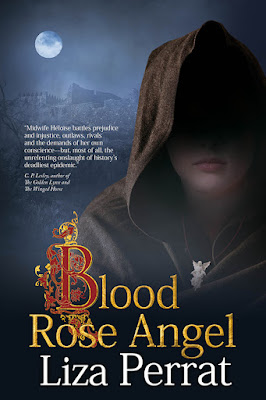


Blood Rose Angel is the 3rd (standalone) novel in my French historical trilogy: The Bone Angel.

1348. As Bubonic Plague makes its first inroads into Europe, medicine, religion, family traditions and love intertwine in a woman’s search for identity and her battle to heal the sick in a world ruled by superstition.

Get your copy for only 99c/p HERE

Sign up for news of my new book releases and receive a FREE copy of Friends & Other Strangers, my award-winning collection of Australian short stories.

http://www.lizaperrat.com/

If you enjoy my books, follow me on BOOKBUB


Tuesday, 7 December 2021

December 8, Light Your candles!


Tomorrow, 8th December, is La Fête des Lumières (Light Festival) in Lyon, emblem of a popular gathering when the people of Lyon share a spirit of solidarity; the spirit of candles burning on windowsills.

Here's a short article I wrote a few years ago, about the history of the light festival.


The Plague Enlightened
by Liza Perrat


‘Protect us from famine, war and plague, Seigneur,” cry the residents of Lyon. The year is 1628. But their plea comes too late. The bubonic plague already crossed the Rhône River in August, terrifying the inhabitants and killing half of them.

By 1643 they are desperate, and pray to the Virgin Mary to return good health to Lyon. Miraculously, the black plague disappears from the city, never to return and the people never doubt their divine protection.

So, how does the celebration of the Virgin Mary’s eradication of the plague become the largest light festival of this modern-day century?

It began on September 8th 1852, with the inauguration of the statue of the Virgin Mary, erected on La basilique Notre-Dame de Fourvière to thank her for ridding Lyon of the plague. Severe flooding prevented the festivities from taking place and the event was postponed to December 8th, and the Lyonnaise people showed their gratitude by lighting candles on their windowsills. As the years passed, this spontaneous jest increased in popularity to become, today, a grandiose festival of light.

During the 1980s, in conjunction with the advent of the ‘lighting plan’, the city of Lyon decided to transform the December 8th festival into la Fête Des Lumières (light festival). Each year, the city’s public places would be illuminated in a different fashion, this coloured symphony of light bathing urban Lyon on the eve of the winter solstice.

My first light festival was in 2002. Anticipating large crowds, we opted for the train into Lyon centreville, descending into the cold night at St. Paul station in the Vieux Lyon. Restaurants lining the cobblestone streets blazed with lights, diners’ chatter and busy waiters. Tantalising aromas of frying garlic, butter and parsley mingled with the fog.

Crossing the Saône River we first glimpsed the illuminations on Fourvière Hill, where the Romans set up camp in the first century B.C. and where, atop the hill, Fourvière basilica was built between 1872 and 1884. Lit up in alternate shades of green, blue and violet, the fortress basilica was transformed into a haunted, spectral tower.

On Place des Terreaux, a group threw and swallowed fire for an enchanted audience, ‘ohs’ and ‘aahs’ echoing into the wintry dark as flames leapt dangerously close to the performers. Then the old stones of the square melted into a cinematic screen of stars and moons. Coloured lights and shapes danced on a stage of renaissance architecture, a bloodied revolutionary soldier crept stealthily across the starry sky, and all sense of dimension was lost.

On Place Paul Chenavard, 15th century St. Nizier church was painted in stripes of dandelion yellow, orange and blue lights.

The temperature dropped, the night thickened with visitors and stall holders cried out: ‘Crepes, saucisson, vin chaud!’.

‘This moving public is at the heart of the festival,’ said the festival’s artistic director, ‘just as it is at the heart of urbanity, each person being a vector of light within the nocturnal landscape.’

At the old printing museum, high on an old stone staircase, children were mesmerised by a mediaeval play of sword–slashing and fierce shouting.

‘The very identity of Lyon is revealed in the light festival,’ said the mayor, ‘through an event that is both a popular event and a tribute to art and architecture through the use of light.

On the stone floor of the Trinity Chapel in Lyon’s 2nd district, 2,000 white glass jars filled with water and blazing oil were distributed in wave forms to create the Equinoctial tide. French baroque music interpreted by three sopranos and an organ accompanied the lighting and extinction of the fires.

The city’s ancient weaving industry and textile production were revived through light projections onto the imposing St Jean Cathedral, invoking the weavers’ mechanisms and gestures. To complete the picture, a green laser beam linked St. Jean Cathedral to Fourvière Basilica.

Since its origin in the XIX century, December 8 has taken on an undeniably futuristic allure. But despite these magnificent illuminations, the Lyonnaise people never forget that the soul of the light festival remains within the beauty of thousands of tiny candle flames burning in unison, on windowsills. 


So, since our rural village is located on the outskirts of Lyon, I’d better hunt out those candles and holders, ready for tomorrow!
 
To celebrate this year's light festival, I’m reducing the price of my black plague novel, Blood Rose Angel for a few days to only 99c/p. 


1348. As Bubonic Plague makes its first inroads into Europe, medicine, religion, family traditions and love intertwine in a woman’s search for identity and her battle to heal the sick in a world ruled by superstition.
 
Get your copy of Blood Rose Angel HERE.
 

Sign up  for new book releases and receive a FREE copy of Friends & Other Strangers, my award-winning collection of Australian short stories.

If you enjoy my books, follow me on BOOKBUB

http://www.lizaperrat.com/


Monday, 15 August 2016

#Mont Blanc –– the Cursed Mountain?


Mont Blanc or the “White Mountain", at 4,808.73 m (15,777 ft) above sea level, is the highest mountain in the Alps and the highest in Europe after the Caucasus peaks.

“The Cursed Mountain” or “La Montagne Maudite” legend says that during Roman times, Mont Blanc was far greener than today, with cattle grazing on the hillsides.


However, ice devils invaded the hillsides, gradually gaining more and more land.

Perched on the summit was an enchanted kingdom where the queen of the fairies, the “White Goddess” lived amidst foliage and flowers. This highly-respected White Goddess had the power to decide upon the fate of all people, so it was named “The Cursed Mountain’.


Pic of La Montagne Maudite in the background (me rather than the White Goddess!)...


In Blood Rose Angel, the third standalone novel in my French historical trilogy: The Bone Angel series, set during the Black Plague of 1348, Mont Blanc is still known as La Montagne Maudite.

The book is currently available at the special promotional price of only 99c/p at the following retailers:

Amazon

Smashwords

Barnes & Noble

Kobo

Extract from Blood Rose Angel…

The baker was still calling out to anyone there to listen: housewives, chickens and geese, the clouds in the sky, the hills. His happy cries pealed out over the market-place, echoing across field and valley, and to the east a rainbow haloed the Montagne Maudite. Raoul imagined how Héloïse must feel at such heavenly moments: seeing how the birth of a healthy babe brought out the best in everyone. Even in the worst of times.


The baker came striding towards Raoul, holding his new son under an arm like one of his loaves, his grin still wide and silly.

‘A miracle, Raoul Stonemason,’ he said, thumping him on the shoulder. Raoul smiled, but took a step backwards. Sibylle’s husband might be recovered from the pestilence but he was still wary.

The baker carefully laid the baby down on the drawing floor and grabbed Raoul’s hand. He flipped it palm-up and began pouring coins into it from his leather scrip. ‘However can I pay you enough?’ he said. ‘Truly a miracle.’

Raoul kept trying to pull his hand away, but the baker’s grip was, surprisingly, stronger than his own.

‘Stop!’ Raoul said. ‘Why are you paying me? It wasn’t Héloïse who midwifed your Sibylle.’

‘But your young Morgane did just as good a job,’ the baker said. ‘Since that yard-brained Captain


locked up your wife, your girl came instead. And a fine––’

‘Morgane birthed your son?’ Raoul said. ‘But she’s only into her eighth summer. How could she …?’