
Sunday, 30 September 2012

Saturday, 29 September 2012
Tuesday, 25 September 2012
THE IDEAL CHAPEL

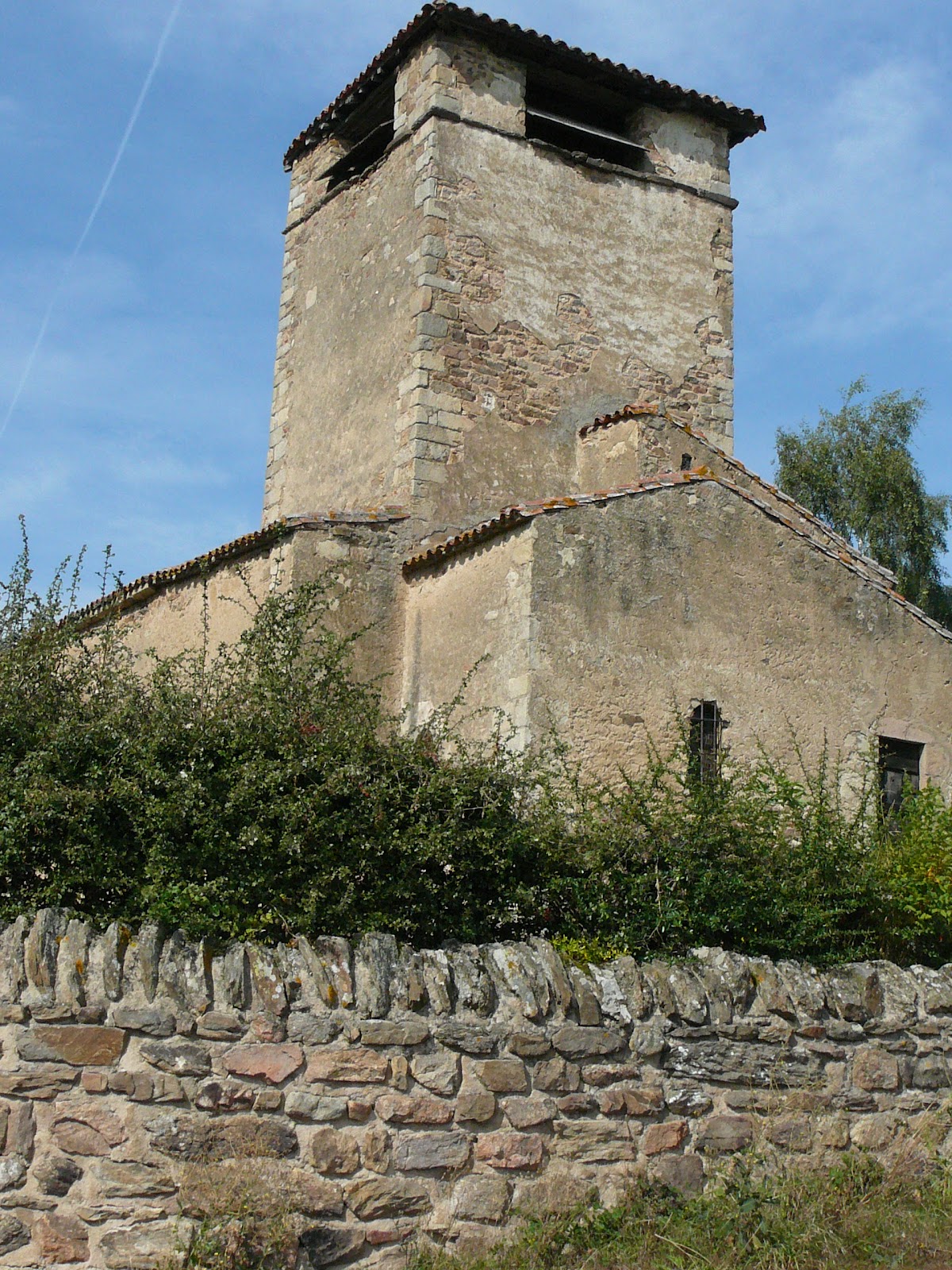


Last Sunday dawned warm
and sunny, so we stuffed cheese, saucisson,
baguettes and water into the backpack and headed up the track behind the house,
into the foothills of the Monts du Lyonnais. After several hours tramping up
and down valleys, and through forests, we reached the hamlet of Châteauvieux,
with its wide view over the Yzeron valley on one side, and the city of Lyon on
the other.
Châteauvieux boasts
not only a history dating back to Roman times, but also an 11th
century chapel, which was my real motive for our day-long hike. For this
medieval edifice seemed the ideal chapel for Angel of Roses – my current novel, set in this rural area west of
Lyon during the 14th century plague years.
As I peered into the chapel,
I felt that twinge of excitement, anticipation and nervousness, when a story
starts to come alive. It was as if, in that dim and dusty interior, I could see
the villagers hunched on the straw-covered flagstones, the elderly and infirm
lined up on benches along the walls, all eyes on the priest. I could hear the priest
telling them that Black Death had come to the village because they were all
such terrible sinners, and now they must pay for their sins, and repent. And,
from her glorious pedestal, I shivered at the implacable stare of the Virgin
Mary.
Not a single tombstone
is left standing in the cemetery, but as I walked across the grass, the silence
broken only by the gentle breeze, it seemed those ancient spirits were still
there, crouched in the shadow of the stone walls, watching my every move, guarding
their sacred site. I expected to see a wimpled face staring from a cracked,
stained-glass window.
‘Who are you?’ she
would say. ‘Where do you come from, dressed like that?’
In that instant, I
wished for time-travel. I’d have loved to have been in their midst,
experiencing their life and times, first-hand. But only for a few hours mind, then
buzz me back to the safety of the 21st century, thanks very much!
We left
the chapel to its ancient keepers and their secrets, and continued on up the
hill towards the village of Yzeron, calling in on some old friends along the
way:

Monday, 24 September 2012
Maiden's Court Interview
Many thanks to Heather Rieseck for interviewing me on The Maiden's Court blog about writing Spirit of Lost Angels.
Tuesday, 18 September 2012
It Never Rains...
A big thank you to Tracy Terry for her review of Spirit of Lost Angels on her blog: Pen and Paper.
The Australian Bookshelf Blog Review

Many thanks to Jayne Fordham for her review of Spirit of Lost Angels on The Australian Bookshelf blog. Read as part of the Australian Women Writers Challenge.
Monday, 17 September 2012
A TALE OF THE FLESH


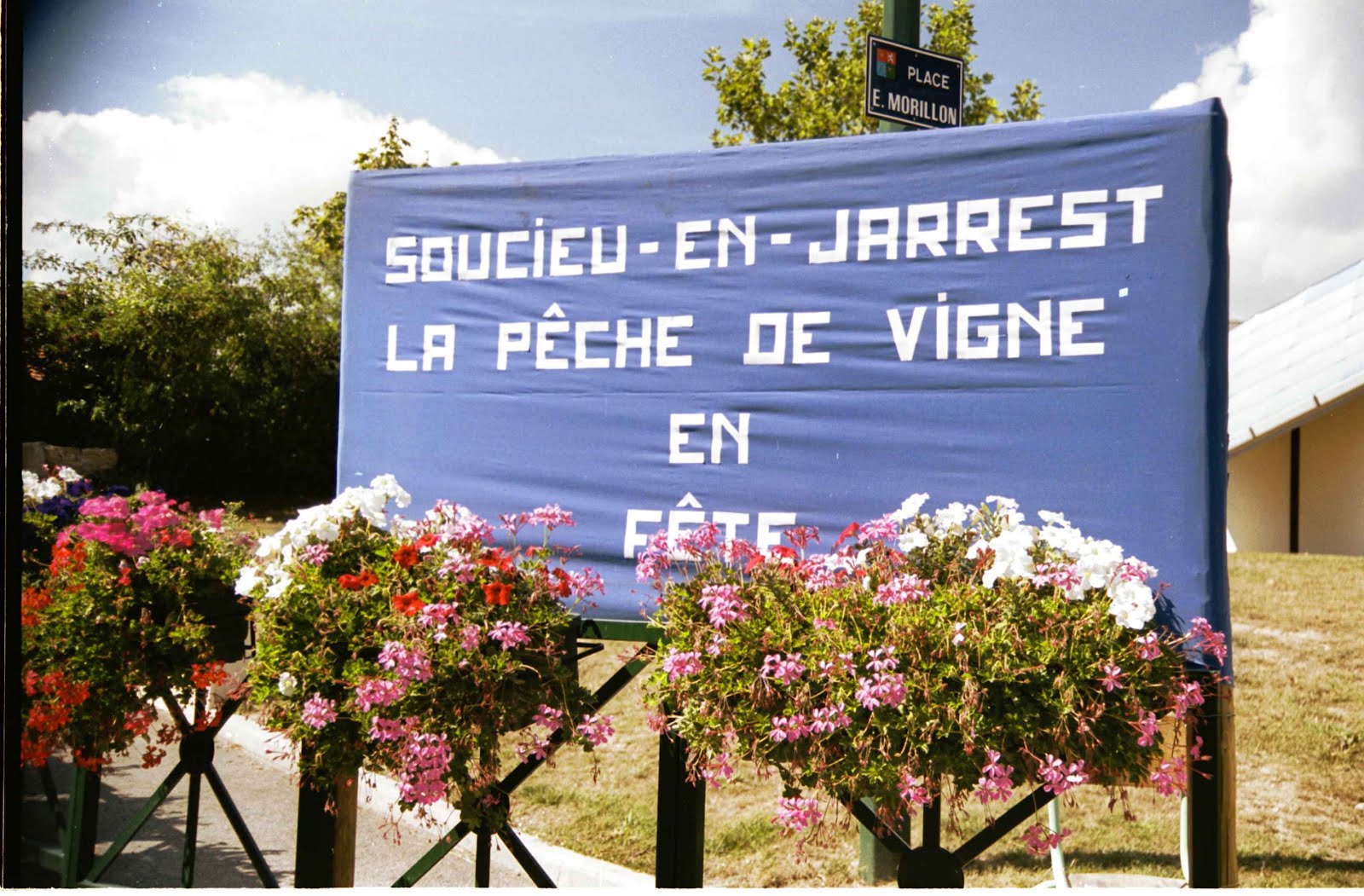


Stretched across the stone facade of the ancient village, a wide banner yawns into the soughing air:
Discover the bush peach in all its guises in Soucieu-en-Jarrest, where the Romans once roamed.
Snug in the twist of a Monts du Lyonnais valley, twenty-odd kilometers west of Lyon, the village of Soucieu-en-Jarrest minds its own business, and on the first Sunday of September its business is the bush peach.
Ruins of the fortified stone wall lost in the revolution, and a sign advertising soupe aux choux, herald the village entrance. Fearing a revolution of the intestinal kind, I decline the cabbage soup and head for the fruit, past tractors and harvest equipment––reminding me that this is, essentially, a farming community.
‘What’s the big deal about peaches?’ I ask a local farmer.
‘Not just a peach, madame, but our own succulent fruit with flesh the colour of blood. The bush peach is grown alongside the vines,’ he explains. ‘Susceptible to the same diseases as the vines but quicker to develop the signs, the vine growers plant peach trees next to their vineyards to warn them of potential problems.’ He smiles. ‘And voilà, the bush peach has been part of our arboricultural patrimony since the seventeenth century.’
So, with its questionable history as martyr, I ask myself if the humble bush peach can hold its head high as a separate identity.
My nostrils guide me to freshly baked chaussons––stewed bush peach turnovers––the golden pastries lined up like slippers in a dormitory.
Alongside the turnovers, a man toils over an army-issue cauldron of stewing peaches. A woman breaks up the fruit, and hurls it into the bubbling magenta mélange.
‘Thirty-five minutes to stew a peach, and an hour for jam, but don’t peel the fruit,’ she warns me, waving her wooden spoon like an off-duty martinet.
To avoid being crushed like the wine grapes, I dodge a purple clown on stilts, a troop of majorettes filing past in his ungainly wake. I skip out of the firing line of thrashing pom-poms and take cover in the stall selling bush peach nectar and wine.
‘You can smell those peaches, n’est-ce pas, madame?’ the man says, offering me a glass of white wine.
‘Delicious,’ I say, savouring the intense, yet charming aroma.
‘If madame would care to try the red? An exquisite blend of blackberry, blackcurrant and raspberry, and perhaps the rosé too?’
Nicely mellowed after three glassfuls, I thank him and leave the man to his serious buyers.
Slurping on a double bush peach sorbet cone, I see the Groupe Folklorique de Thurins is already swinging, the women’s traditional red and yellow skirts twirling as their breeches-clad partners spin them about the stage.
As the dancers flounce off, I head to the library where a storyteller––looking all the part in a toga––is narrating a Roman tale of intrigue.
‘In 43 BC, Lyon was the capital of Gaul, and called Lugdunum. The Romans got their water from aqueducts, the ruins of which we can still see all over the Monts du Lyonnais.’
The whites of the children’s eyes flash in the darkened room as the storyteller unfolds a tale of stolen jewels, culminating in a bloody sword duel atop an aqueduct tower.
Strategically placed near the bar, serious competitors are engaged in a pétanque match. The French take their bowling game as seriously as their wine, precisely measuring questionable distances. Soaking up the sun, I sip my tangy bush peach cocktail and watch them exclaiming and waving their arms as the metal ball lands where it should, or shouldn’t.
As I taste the surprisingly pleasant union of white cheese drowned in bush peach sauce, Mr. Loudspeaker orders the crowd to gather for the grande finale.
‘And now, ladies and gentlemen, Miss Bush Peach and Mr. Lyonnaise Hills Wines will be united.’
We enthusiastically applaud the chosen young girl and boy grinning under their dubious honour, a few wolf whistles ringing from the edges of the crowd.
The sun begins its westward arc towards the Monts du Lyonnais, the crisp cusp-of-autumn air nibbling at me. Mothers drag sweaters from heavily-laden bags, the party winds down and a playful breeze whispers centuries of farming secrets across the fields, orchards and vineyards.
Subscribe to:
Posts (Atom)